
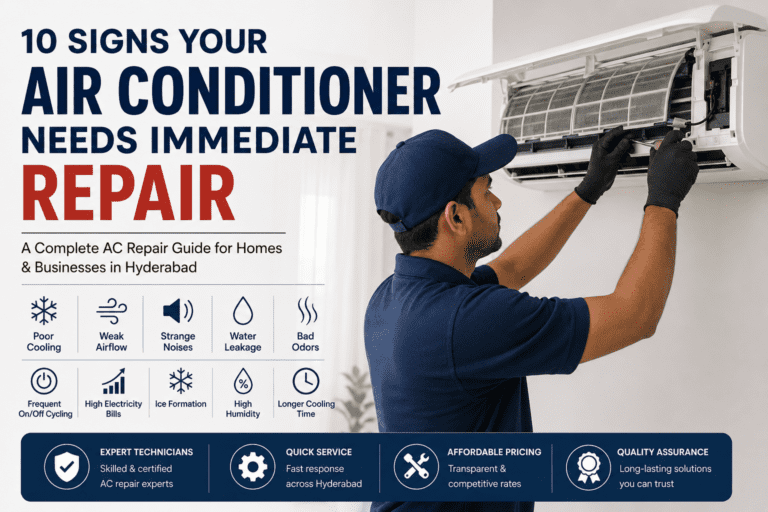
10 Signs Your Air Conditioner Needs Immediate Repair
A properly functioning air conditioner is essential for maintaining comfort during Hyderabad’s long and hot summers. However, like any mechanical system, air conditioners can develop problems over time. Ignoring early warning signs often leads to higher electricity bills, expensive repairs, and unexpected breakdowns.
Whether you own a split AC, window AC, cassette AC, or a commercial HVAC system, recognizing these signs can help prevent major issues and extend the life of your equipment.
Why Early AC Repairs Matter
Many homeowners and businesses wait until their AC stops working completely before calling for service. Unfortunately, delaying repairs can result in:
Reduced cooling efficiency
Increased power consumption
Higher repair costs
Shortened equipment lifespan
Poor indoor air quality
Complete compressor failure
Understanding the warning signs allows you to address problems before they become serious.
1. Your AC Is Not Cooling Properly
One of the most obvious signs of trouble is insufficient cooling.
Common Causes
Dirty air filters
Low refrigerant levels
Compressor issues
Blocked condenser coils
Faulty thermostat
Leaking refrigerant
If your air conditioner runs continuously but fails to maintain a comfortable temperature, professional inspection is recommended.
Why Immediate Repair Is Important
Poor cooling forces the system to work harder, increasing electricity consumption and putting extra stress on critical components.
2. Weak Airflow from Vents
Weak airflow often indicates that your AC is struggling to distribute cool air effectively.
Possible Reasons
Clogged air filters
Damaged blower motor
Dirty evaporator coil
Duct blockage
Fan problems
Reduced airflow not only affects comfort but can also increase humidity levels indoors.
Solution
Professional cleaning and inspection can restore airflow and improve efficiency.
3. Strange Noises Coming from the AC Unit
Air conditioners normally produce a gentle humming sound. Unusual noises should never be ignored.
Sounds and Their Meanings
Grinding Noise
May indicate motor bearing problems.
Clicking Sound
Could suggest relay or electrical issues.
Buzzing Noise
Often associated with loose components or capacitor failure.
Squealing Sound
Can indicate fan motor problems.
Banging Noise
May point to loose internal parts or compressor damage.
Early diagnosis can prevent extensive damage and costly repairs.
4. Water Leakage Around the Indoor Unit
Water pooling beneath your indoor unit is not normal.
Causes Include
Clogged drain pipe
Frozen evaporator coils
Improper installation
Drain pan damage
Excess humidity
Ignoring water leaks can result in:
Mold growth
Ceiling damage
Wall stains
Electrical hazards
Timely repairs can prevent costly property damage.
5. Bad Odors Coming from the AC
Unpleasant smells indicate that something is wrong inside the system.
Common Types of Odors
Musty Smell
Usually caused by mold and bacteria growth.
Burning Smell
May indicate electrical problems or overheating components.
Rotten Odor
Could result from contaminated drain lines.
Poor indoor air quality can affect family members, office employees, and customers.
Professional deep cleaning removes bacteria, dust, and mold buildup.
6. Frequent On-and-Off Cycling
Short cycling occurs when your AC repeatedly starts and stops without completing a cooling cycle.
Reasons Include
Oversized AC unit
Thermostat malfunction
Refrigerant issues
Dirty condenser coils
Electrical faults
Short cycling causes:
Increased wear and tear
Higher electricity bills
Reduced lifespan
Inconsistent cooling
Professional diagnosis is necessary to determine the root cause.
7. Rising Electricity Bills
Have you noticed your monthly electricity bill increasing despite similar usage patterns?
An inefficient air conditioner consumes more power while delivering less cooling.
Factors Behind High Energy Consumption
Dirty filters
Refrigerant leaks
Compressor problems
Aging components
Poor maintenance
Regular servicing helps maintain energy efficiency and lowers operating costs.
8. Ice Formation on the Indoor Unit
Ice accumulation on evaporator coils is a sign that your system isn’t functioning properly.
Possible Causes
Dirty air filters
Refrigerant leaks
Low airflow
Blower motor issues
Dirty evaporator coils
Many people assume ice means the AC is working harder, but it actually indicates reduced cooling performance.
Ignoring frozen coils may damage the compressor, which is one of the most expensive components to replace.
9. Unusual Humidity Indoors
Air conditioners are designed to remove excess humidity from indoor spaces.
If your home or office feels sticky and uncomfortable, your AC may not be dehumidifying effectively.
Symptoms Include
Damp feeling indoors
Mold growth
Condensation on windows
Musty odors
High humidity affects comfort and indoor air quality.
A professional technician can inspect the system and restore proper performance.
10. AC Takes Longer to Cool the Room
If your AC previously cooled the room within 15 minutes but now takes much longer, something is wrong.
Potential Causes
Dirty coils
Refrigerant loss
Fan problems
Aging compressor
Blocked airflow
Slow cooling increases electricity consumption and reduces overall efficiency.
Common AC Problems in Hyderabad
Due to Hyderabad’s high temperatures and dusty environment, air conditioners often experience:
Dirty filters
Coil contamination
Refrigerant leaks
Capacitor failure
Compressor overload
Drain blockage
Fan motor problems
Regular maintenance helps prevent these issues and ensures reliable cooling throughout the year.
How Often Should You Service Your AC?
Residential Homes
Every 6 months.
Offices and Commercial Spaces
Every 3–4 months.
Restaurants and High-Usage Facilities
Quarterly maintenance is recommended.
Regular maintenance improves:
Cooling performance
Indoor air quality
Energy efficiency
Equipment lifespan
Reliability
When Should You Replace Instead of Repair?
Consider replacement if:
Your AC is over 10–15 years old.
Repairs are becoming frequent.
Electricity bills continue increasing.
Compressor replacement costs are high.
Cooling performance remains poor despite repairs.
Modern inverter air conditioners offer better energy efficiency and lower operating costs.
Tips to Keep Your AC Running Efficiently
Clean Filters Monthly
Dirty filters restrict airflow and reduce efficiency.
Schedule Preventive Maintenance
Routine servicing helps identify problems early.
Keep Outdoor Units Clean
Remove dust, leaves, and debris around condenser units.
Avoid Extremely Low Temperature Settings
Set the thermostat between 24°C and 26°C for optimal efficiency.
Seal Doors and Windows
Prevent cool air loss and reduce energy consumption.
Frequently Asked Questions
Why is my AC running but not cooling?
Possible reasons include dirty filters, low refrigerant levels, compressor issues, or blocked airflow.
Can I continue using my AC if it is leaking water?
No. Water leakage may cause mold growth, structural damage, and electrical hazards.
How often should AC gas be refilled?
Refrigerant does not get consumed under normal conditions. Frequent gas refilling usually indicates a leak that requires repair.
Why is my electricity bill increasing?
Poor maintenance, dirty coils, refrigerant leaks, and aging components can reduce efficiency and increase power consumption.
Is annual maintenance necessary?
Yes. Regular maintenance improves performance, reduces breakdowns, and extends equipment life.
Conclusion
Air conditioners rarely fail without warning. Strange noises, poor cooling, water leakage, high electricity bills, and unpleasant odors are signs that should never be ignored. Early diagnosis and timely repairs can prevent costly breakdowns and ensure uninterrupted comfort during Hyderabad’s hot weather.
Routine maintenance and professional servicing remain the most effective ways to maximize the lifespan and efficiency of your AC system.